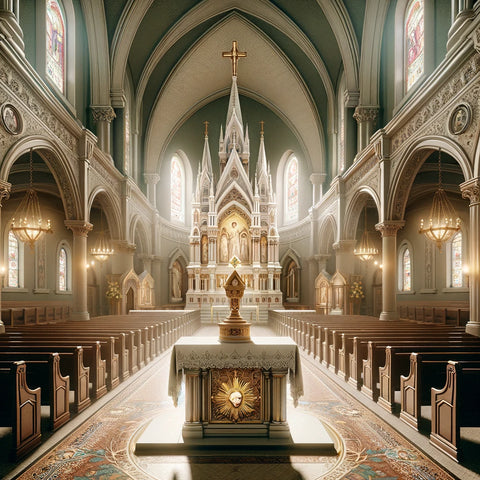
The Essence and Importance of the Tabernacle in Christian Worship
Within the rich tradition of Christian tradition, the tabernacle stands as a example of sacred significance, adorning churches across the globe. Its presence might puzzle newcomers or those early in their faith journey, sparking curiosity about its role and significance. This exploration aims to demystify the tabernacle, illuminating its purpose and why it is a key element of church architecture.
Understanding the Tabernacle
At its core, the term "tabernacle" signifies a "dwelling place," a concept not exclusive to any single faith. In Christianity, the tabernacle is revered as the dwelling place of Christ in the Eucharist, embodying His presence among His followers. The Eucharist, central to Christian worship, encapsulates sacrifice, thanksgiving, and the sacred sharing of bread and wine, reflecting Jesus Christ's last supper with His disciples. The tabernacle serves a practical role, safeguarding the Eucharist outside of Mass, ensuring it is preserved for distribution, especially to those unable to attend services.
The concept of the tabernacle has its roots in ancient Judaism, where it referred to the portable sanctuaries carried by the Israelites during their desert wanderings. This historical context enriches the Christian tabernacle's significance, linking it to a tradition of divine presence and protection.
While often associated with Catholicism, tabernacles are integral to various Christian denominations, including Eastern Orthodoxy, Lutheranism, and Anglicanism. Typically, a tabernacle is a secured, immovable container, sometimes embedded within a church's walls as an ambry.

The Role of the Tabernacle in Churches
The primary function of the tabernacle in a church setting is to house the Blessed Sacrament— the consecrated elements of bread and wine, representing the body and blood of Jesus Christ. It serves as a secure repository, enabling the sacrament's transportation to the ill or homebound, extending the grace of Mass beyond church walls.
Also, the tabernacle acts as a focal point for personal prayer and reflection, reminding the faithful of Christ's enduring presence and sacrifice. The Second Vatican Council highlighted the tabernacle's importance, leading to distinct practices for altar and tabernacle masses, underscoring its symbolic and spiritual significance in the Christian faith.
Placement and Singularity of Tabernacles
Historically central to church architecture, the tabernacle's placement has evolved, often positioned discreetly to enhance security without diminishing its sanctity. Regardless of location, the essence of the tabernacle remains in the Eucharist it contains, transcending physical placement.
Church law mandates a single, immovable tabernacle per church, ensuring focus and reverence are maintained. Exceptions are temporary, facilitating the transport of a tabernacle to a new location, but always reverting to a singular sacred space.

Composition and Legalities
Tabernacles may be crafted from various materials, including stone, wood, and metal, with many historical examples fashioned from gold, reflecting their precious contents. Their design is diverse, with no prescribed shape, allowing for cultural and architectural expression.
Church law stipulates that a tabernacle must be immovable, secure, and opaque to prevent desecration, alongside the perpetual presence of a lit oil lamp, symbolizing God's eternal light and presence, as instructed to Moses.
Conclusion
The tabernacle is a profound emblem of Christ's presence within the Christian faith, embodying themes of sacrifice, sanctuary, and community. It bridges the divine with the daily, offering a tangible connection to the sacred for believers worldwide.