Saint Joan of Arc: The Warrior Saint Who Changed History
Joan of Arc was a teenage peasant girl who led the French army to victory, was burned at the stake at 19, and was canonized as a saint 489 years later. Her story is one of the most extraordinary in all of Catholic history: a story of faith, courage, betrayal, and ultimate vindication.
Who Was Joan of Arc?
Joan was born around 1412 in Domrémy, France, to a peasant family. At age 13, she began hearing voices she identified as Saint Michael the Archangel, Saint Catherine, and Saint Margaret, who told her to help the French Dauphin (crown prince) Charles VII reclaim his throne from the English during the Hundred Years' War.
The Mission
At 17, Joan convinced the Dauphin to give her command of an army. Against all odds (a teenage girl with no military training), she led the French to a decisive victory at the Siege of Orléans in 1429, turning the tide of the war. She then escorted Charles VII to Reims, where he was crowned King of France.

The Trial and Martyrdom
In 1430, Joan was captured by Burgundian forces allied with England. She was put on trial for heresy by a pro-English Church court led by Bishop Pierre Cauchon. The trial was politically motivated — the English needed to discredit her divine mission to undermine Charles VII's legitimacy.
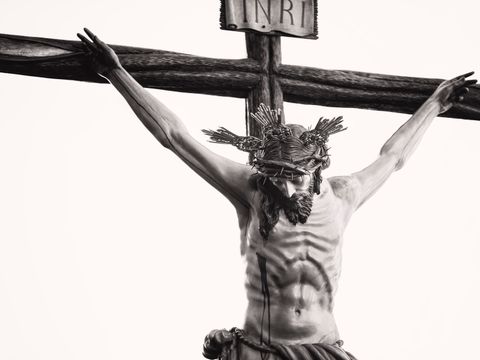
On May 30, 1431, at just 19 years old, Joan was burned at the stake in Rouen. Her last word was "Jesus." She died looking at a crucifix held by a sympathetic priest.
Vindication and Canonization
In 1456 — 25 years after her death — a papal inquiry declared Joan innocent and the original trial fraudulent. She was beatified in 1909 and canonized by Pope Benedict XV on May 16, 1920. She is the patron saint of France, soldiers, and women in the military.

Joan's Military Campaigns in Detail
Joan of Arc's military career lasted barely over a year — from April 1429 to May 1430 — yet in that brief time she changed the course of the Hundred Years' War and the destiny of France.
When Joan arrived at the French court in Chinon in March 1429, the military situation was dire. The English and their Burgundian allies controlled most of northern France, including Paris. The city of Orleans had been under siege since October 1428, and its fall would have given the English effective control of the Loire Valley — opening the road to the remaining French territory.
The Siege of Orleans (April-May 1429): Joan arrived at Orleans on April 29, 1429. Within nine days, she led a series of aggressive assaults on the English fortifications surrounding the city. At the Battle of Les Tourelles on May 7, she was struck by a crossbow bolt between her neck and shoulder but returned to the battlefield the same day, rallying her troops. The English abandoned the siege on May 8 — a date still celebrated in Orleans today as the "Fete de Jeanne d'Arc."
The Loire Campaign (June 1429): Emboldened by Orleans, Joan pressed the offensive. In rapid succession, her forces captured Jargeau (June 12), Meung-sur-Loire (June 15), and Beaugency (June 16). The decisive Battle of Patay on June 18 was a devastating French victory — the English lost between 2,000 and 2,500 men, and the feared English commander John Talbot was captured.
The March to Reims and the Coronation (July 1429): Joan's most strategically brilliant move was insisting on marching to Reims for the coronation of Charles VII — through territory still hostile or uncertain. City after city opened its gates as Joan approached: Auxerre, Troyes, Chalons. On July 17, 1429, Charles VII was crowned in Reims Cathedral, with Joan standing beside him holding her banner. This coronation was politically transformative: it gave Charles legitimacy that the English-backed claim could never match.
The Trial of Joan of Arc
Joan's trial, held in Rouen from January to May 1431, is one of the most documented and most unjust legal proceedings in medieval history. The full transcript survives, providing a detailed record of her interrogation.
Joan was captured by Burgundian forces at Compiegne on May 23, 1430, and eventually sold to the English for 10,000 livres. The trial was overseen by Pierre Cauchon, Bishop of Beauvais, who was deeply allied with the English cause. It was an ecclesiastical trial — meaning Joan was charged with heresy and witchcraft, not military crimes.
Over the course of months, Joan was interrogated repeatedly by dozens of trained theologians. Despite having no formal education and no legal counsel, her answers were sharp and surprising. When asked if she was in a state of grace — a trick question, since answering "yes" would be presumptuous and "no" would be self-condemning — she famously replied: "If I am not, may God put me there; and if I am, may God so keep me." The notaries recorded that her interrogators were stunned into silence.
The trial was riddled with procedural violations. Joan was denied legal representation. She was held in a secular military prison rather than an ecclesiastical one. English soldiers guarded her cell, and there are documented allegations of physical mistreatment. Despite all this, the tribunal could only convict her by focusing on her refusal to submit her visions to Church authority and her insistence on wearing men's clothing (which she later explained was for protection from assault).
Joan was burned at the stake in the Old Market Square of Rouen on May 30, 1431. She was 19 years old. According to witnesses, her last word was "Jesus," spoken six times.
Rehabilitation and the Path to Sainthood
Twenty-five years after Joan's execution, a retrial — called the "nullification trial" — was authorized by Pope Callixtus III. On July 7, 1456, the original verdict was formally overturned, and Joan was declared innocent.
The rehabilitation trial heard testimony from 115 witnesses, many of whom had known Joan personally. The original trial judges were investigated, and Bishop Cauchon (who had died in 1442) was found to have acted out of political bias rather than genuine concern for faith. The full record of Joan's canonization process shows how the Church eventually recognized both her sanctity and the injustice done to her. Learn more about the broader canonization process here.
Joan's cause for canonization was formally opened in 1869 by Bishop Dupanloup of Orleans. She was beatified in 1909 and canonized on May 16, 1920, by Pope Benedict XV. She was declared patron saint of France.
Cultural Legacy: Joan in Art, Literature, and Film
Joan of Arc has inspired more works of art, literature, music, and film than almost any other saint. Her story — the peasant girl who saved a kingdom and was betrayed for it — resonates across cultures and centuries.
- Literature: Mark Twain considered his Personal Recollections of Joan of Arc (1896) his best work. George Bernard Shaw's Saint Joan (1923) won the Nobel Prize in Literature and portrayed her as a proto-Protestant and early nationalist.
- Art: From medieval manuscript illustrations to Jules Bastien-Lepage's famous 1879 painting Joan of Arc (now in the Metropolitan Museum of Art), she has been one of the most frequently depicted saints in Western art.
- Film: Carl Theodor Dreyer's The Passion of Joan of Arc (1928) is consistently ranked among the greatest films ever made. More recent portrayals include Luc Besson's The Messenger (1999) and various television productions.
- Music: Verdi, Tchaikovsky, and Leonard Cohen have all created works inspired by Joan. The French national anthem, while not about Joan, draws on the same spirit of resistance she embodied.
Why Joan of Arc Matters Today
Joan's relevance extends far beyond medieval history. She is a patron saint for anyone who feels called by God to act against seemingly impossible odds — and who faces misunderstanding or opposition for doing so.
For young Catholics especially, Joan demonstrates that age is no barrier to holiness or heroism. She was 17 when she led armies, 19 when she died. Her courage came not from military training or political connections but from an unshakeable trust in God's will, even when that trust led to suffering and death.
Joan is also a powerful symbol for anyone who has been unjustly judged. Her wrongful conviction and posthumous vindication remind us that human institutions — even Church tribunals — can err, but that truth ultimately prevails. For more on saints who inspire courage, explore our collection of patron saint medals, each one blessed in Rome.

Frequently Asked Questions